Hybrid Solar Inverter in Abuja: Why We Built a New 12KVA
Let me start with a normal night in Abuja.
The power goes off. Again. You hear your neighbour’s generator start up. Then another one. Soon the whole street is humming, and the smell of fuel is in the air. The next morning, cars line up to buy diesel that now costs about ₦2,000 for just one litre.
I have seen this happen for years. My name is behind a solar factory in China called YDSL, and I have sold solar products for sixteen years to more than thirty countries. Now I live and work in Abuja, where my company ECOHOME helps homes and shops get free power from the sun.
This guide is about one part of that system. The most important part. The hybrid solar inverter.
I will keep this simple. No big words. By the end, you will know what a hybrid solar inverter is, how it works, what it costs in Nigeria, and why we built a new 12KVA hybrid solar inverter when most of the market still stops at 11KVA. Let’s go.
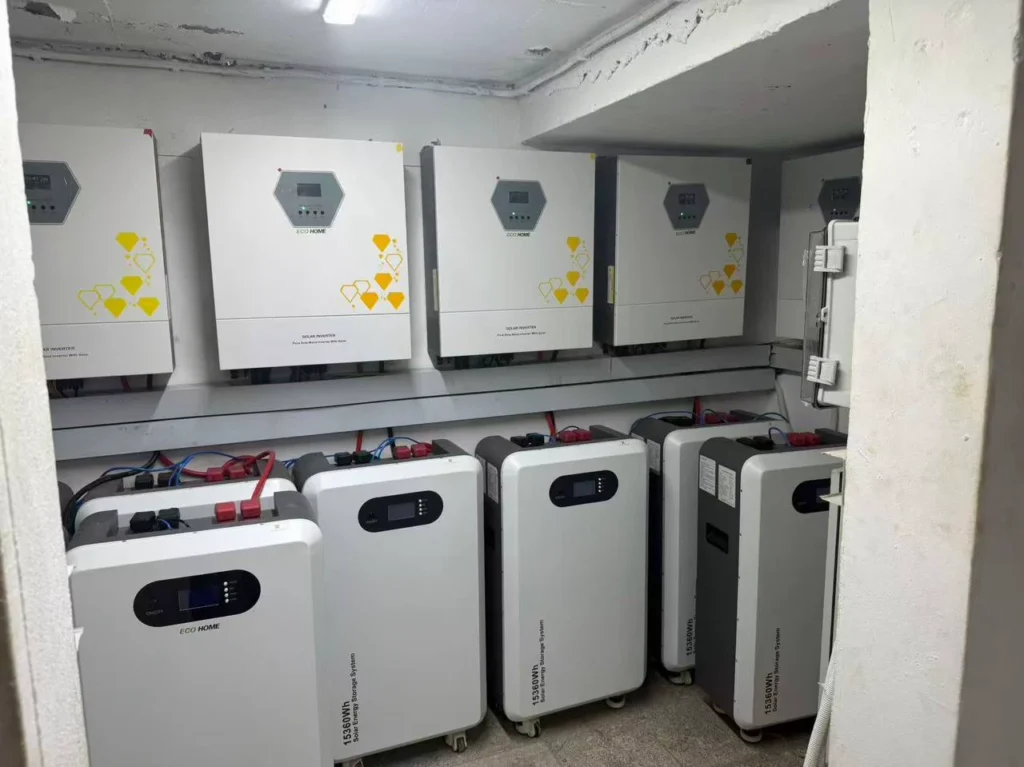
What is a hybrid solar inverter?
Solar panels make one kind of power. Your fridge, your TV, and your lights need another kind of power. The two do not match. Something must change one into the other.
That something is the inverter.
A normal inverter just changes power from a battery so your home can use it. A hybrid inverter does much more. The word “hybrid” means “mix.” A hybrid solar inverter can mix three power sources at the same time:
- The sun (your solar panels)
- Your battery
- The grid (NEPA / your DisCo)
Think of it like the brain of your whole power system. It is always thinking: Is the sun out? Use the sun. Is the sun gone but the battery is full? Use the battery. Is the battery low and NEPA is on? Charge the battery and rest.
It makes these choices by itself, in less time than you can blink. You do not press anything. The lights just stay on.
That is why a hybrid solar inverter is the heart of every good solar system we install. Get this part right, and the rest is easy. Get it wrong, and nothing works well.
Hybrid inverter vs a normal inverter — the simple difference
People often ask me, “I already have an inverter at home. Why do I need a hybrid one?”
Here is the easy answer.
A normal inverter only knows the battery. When the battery is empty, you are in the dark. It cannot take power straight from the sun.
A hybrid inverter knows the sun, the battery, and the grid. During the day, it can run your home straight from your solar panels and charge your battery at the same time. At night, it uses the battery. When there is heavy sun and a full battery, it stops wasting power.
So a hybrid inverter does three jobs in one box. That means fewer parts, fewer wires, and fewer things that can break. For a country with a grid that falls down almost every month, this is the smart choice. You can read more about how the whole setup fits together on our solar energy system service page.
What does “12KVA” mean? (And why not just 11KVA?)
Now the big question. You keep seeing numbers like 5KVA, 11KVA, and 12KVA. Some people even write it as “12VKA” by mistake. What do they mean?
KVA is just a way to measure how much power a machine can handle at once. Bigger number, more power. It is like the size of a water pipe. A small pipe gives a little water. A big pipe gives a lot.
So:
- A 5KVA inverter can run a small flat. Lights, a fan, a TV, a fridge.
- An 11KVA inverter can run a big house or a small shop. More ACs, a freezer, a borehole pump.
- A 12KVA inverter can do all of that — with extra room to spare.
Now here is the part many sellers will not tell you. In Abuja, most of the bigger inverters you find are rated around 11KVA. That is fine. But “fine” is not the same as “future-proof.”
Here is why the extra room matters. When you buy an inverter that is just big enough, you have no space to grow. You add one more AC, or a new freezer for your shop, and suddenly the inverter is working at its limit every single day. Machines that work at their limit get hot, get tired, and break early.
Our 12KVA hybrid solar inverter gives you that extra room. It is one step bigger. So when your family grows, or your business grows, your inverter is ready. You are not stressed. The machine is not stressed. That calm is worth a lot.
Why we built a new-generation 12KVA hybrid solar inverter for Abuja
I did not pick 12KVA by accident. I picked it because of what I see every week in this city.
On 29 December 2025, the national grid in Nigeria fell down completely. Most of the country went dark in the afternoon. Abuja was one of only two areas still getting any power at all — and only a tiny bit. This was not a one-time thing. The grid broke again and again through 2024, 2025, and into 2026. You can read about it from Nigeria’s own news reports.
Experts say these blackouts cost Nigeria about $29 billion every year. That is money lost because shops cannot open, food goes bad, and work stops. The government knows this too. That is why the Rural Electrification Agency (REA) has spent years putting up solar systems all over the country, and why the Nigerian Electricity Regulatory Commission (NERC) keeps reporting the power numbers.
So when I sat down to choose the right inverter for ECOHOME to sell in Abuja, I asked one question: What does a real Nigerian home or shop need to never fear NEPA again?
The answer was a hybrid solar inverter that is:
- Big enough to grow — so we went 12KVA, not just 11KVA.
- Made for lots of sun — Nigeria has some of the best sunshine in the world. You can check the sun in your own area on the free Global Solar Atlas tool.
- Built for our heat and dust — our new-generation units are sealed against dust and water, because Abuja is not a clean lab.
- Smart — you can watch it from your phone and see how much power you are making.
This is not a copy of an old design. It is a new-generation hybrid solar inverter made for the way we actually live here. That is the difference between a factory that ships boxes and blends away, and one like YDSL that stands in Abuja, through ECOHOME, and answers when you call.
A quick example from real life in Abuja
Let me show you what this looks like in a real home, because numbers on a page can feel cold.
Here is the kind of thing we see all the time. A family in Gwarinpa was spending a huge amount on diesel every month — sometimes more than ₦150,000 — just to keep two ACs, a freezer, and the lights going at night. The generator was loud. It broke down often. And every fuel price rise hurt them more.
They came to us thinking they needed the biggest, most expensive thing on the market. They did not. After we looked at what they actually used, the right answer was clear: a 12KVA hybrid solar inverter with a well-sized lithium battery and panels on the roof. The 12KVA size gave them room for one more AC later, which they planned to add.
Within the first month, the generator went almost silent. It now only runs on rare cloudy days when the battery runs low. The fuel money they used to burn every month now slowly pays back the system instead. That is the quiet power of getting the inverter size and the battery right from the start. It is not magic. It is just good sizing — and it is the part most cheap sellers skip.
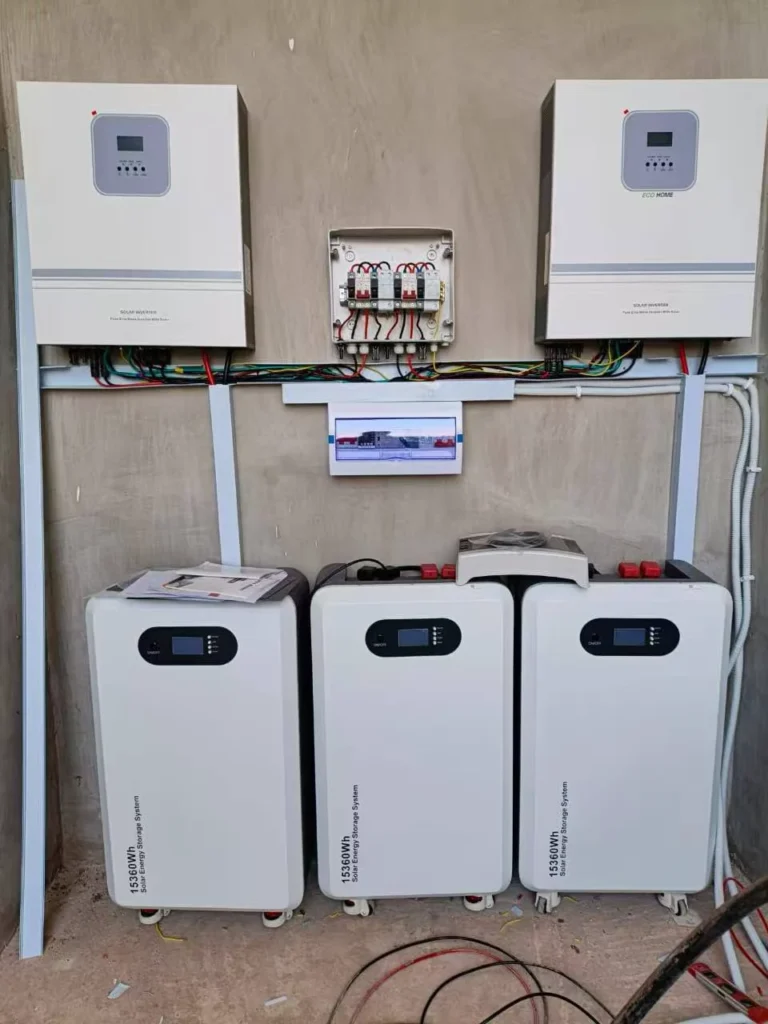
Hybrid solar inverter with battery — how they work together
A hybrid inverter is only half the story. The other half is the battery.
A hybrid solar inverter with battery is a true power team. The inverter is the brain. The battery is the store-room. During the day, the sun fills the store-room. At night, the brain takes power out of the store-room to run your home. No sun? No NEPA? No problem. You still have light.
There are two main kinds of battery, and the kind you pick changes everything.
1. Tubular (lead-acid) batteries. These are the older kind. They cost less at the start. But they do not last as long, and you must take care of them. For many people, the cheaper price hides a higher cost later.
2. Lithium batteries (LiFePO4). These are the new kind. They cost more at the start, but they last about ten years, hold more power, and need no care. Over time, they are the cheaper choice. Most good systems in Nigeria are now moving to lithium.
Our 12KVA inverter works with both. But for most homes and shops, we suggest lithium battery storage, because you pay once and forget about it for years. A strong inverter paired with a weak, wrongly-sized battery is one of the top reasons solar systems fail. The two must match. That matching is a big part of the job we do for you.
Hybrid solar inverter price in Nigeria — the honest numbers
Now the question everyone really wants answered. How much does a hybrid solar inverter cost in Nigeria?
I will be honest with you, because honest is the only way I know how to sell.
Prices change a lot. Almost all solar parts are brought in from outside Nigeria, so when the Naira goes up or down against the dollar, the price moves too. But here are real ranges for 2026 to guide you.
Just the inverter, on its own: – A small 5KVA hybrid inverter: about ₦350,000 to ₦750,000. – A large 10KVA to 12KVA hybrid inverter: more, because it is bigger and stronger.
The full system (this is what really matters): – A medium home setup (around 5KVA, with panels and battery): about ₦2,000,000 to ₦4,500,000. – A large home or business setup (10KVA to 12KVA, with panels and a big lithium battery): about ₦5,000,000 to ₦12,000,000 or more.
Why such a big range? Because the battery is usually the biggest cost. A good lithium battery can cost more than the inverter and the panels together. So when someone asks “what is the hybrid solar inverter price in Nigeria?“, the real answer is: it depends on how much power you want to store.
Here is the part that makes it worth it. Diesel now costs around ₦2,000 for one litre. A generator can drink many litres in one day. Add that up over a year, and a big generator can cost you millions of Naira in fuel alone — money that just burns away. A solar system costs more at the start, but then the fuel is free, because the fuel is the sun.
So the smart way to think is not “What is the cheapest box?” The smart way is “How much am I losing to fuel each year, and how fast will solar pay me back?”
For a real price on our 12KVA hybrid solar inverter and a full system sized for your home, just contact the ECOHOME team in Abuja. We will look at what you actually use and give you a clear, written quote. No tricks.
Top 10 things to check before you buy a hybrid solar inverter
People search for the “top 10 hybrid solar inverter” hoping for a magic list of brands. I will not give you that, because the “best brand” depends on your home and your budget — and most of those lists online are just adverts.
Instead, here is something more useful. These are the top 10 things I check before I let any hybrid solar inverter go into a customer’s home. Use this list with us, or with anyone else.
Is it a true hybrid? It must handle the sun, the battery, and the grid together. If it can only do the battery, it is not a real hybrid solar inverter.
Is it the right size? Too small and it will struggle. A little extra room (like our 12KVA) is always safer than “just enough.”
Does it have MPPT? MPPT is a smart part inside that pulls the most power out of your solar panels, even on cloudy days. Good inverters have it. Cheap ones may not.
Pure sine wave output. This means clean power. Clean power is safe for fragile things like laptops, TVs, and medical machines. Always ask for it.
Can it work with lithium batteries? New batteries are lithium. Make sure the inverter is ready for them, not just old tubular ones.
How fast does it switch? When NEPA goes off, a good inverter switches in about the time it takes to blink. You should barely notice.
Is it sealed against dust and water? Abuja has dust and rain. A sealed inverter lasts longer in real conditions.
Can you watch it from your phone? New-generation inverters let you see your power on an app. This helps you spot problems early.
What is the warranty? A good hybrid solar inverter should come with a real warranty, often around five years. A short warranty is a warning sign.
Who fixes it, and where are they? This is the most important one. A warranty means nothing if the helper is far away. We are based right here at NAF Valley Estate, Asokoro, Abuja, on purpose.
If a seller gets nervous when you ask these ten questions, that is your answer. Walk away.
Common questions about hybrid solar inverters
Can a hybrid solar inverter work without solar panels? Yes, for a while. It can charge from NEPA and run your home from the battery. But you only get free power when you add solar panels. Without panels, you still pay for power.
Can it run my air conditioner? A 12KVA hybrid solar inverter can run several ACs at once, if your battery and panels are sized for it. This is why we always check your real usage first. An AC needs a strong, well-matched system.
Is a hybrid solar inverter better than a generator? For most people, yes — over time. A generator is cheaper to buy but very costly to feed, because diesel and petrol keep rising. Solar costs more at the start, then the fuel is free. It is also quiet and clean.
How long does it last? A good hybrid solar inverter can last many years. A quality lithium battery often lasts about ten years. Cheap parts fail much faster, which is why the cheapest option is rarely the best one.
Do I really need 12KVA, or is 11KVA enough? If your needs will never grow, a smaller size may be fine. But homes and shops almost always grow. The small extra room in a 12KVA inverter saves you from buying a bigger one again in two years.
What else can I add later? A good system can grow with you. Many of our customers later add more battery storage, or even a solar charger for an electric car. A new-generation inverter is built to grow.
Where to buy a hybrid solar inverter in Abuja
If you live in Abuja and you are tired of fuel queues, dark nights, and a grid you cannot trust, this is what we offer.
At ECOHOME, we sell and fit our new-generation 12KVA hybrid solar inverter, made by our own factory, YDSL. We do not just drop a box at your gate. We look at your home, size the system for your real needs, fit it well, and stay close by to help. We cover all of Abuja: Maitama, Wuse, Gwarinpa, Lugbe, Lokogoma, Kubwa, Jabi, Life Camp, Apo, and the areas around them.
Because we are the maker, there is no middleman standing between the factory and your roof. If a part is needed, it comes straight from us. If something must change, we change it at the source. That is how we keep our promise.
You can see the full inverter range on our hybrid solar inverter page, learn about battery storage here, or read our wider story in our guide to solar energy system service in Abuja. When you are ready for a real quote, just reach the ECOHOME team.

Final thoughts
A hybrid solar inverter is not just a box. It is the brain that decides whether your lights stay on when the rest of the street goes dark.
Most of the market in Abuja stops at 11KVA. We chose to go one step further with a new-generation 12KVA hybrid solar inverter — not to sound big, but because real homes and real shops grow, and they deserve room to grow without fear.
The sun over Nigeria is free, strong, and never queues for fuel. With the right hybrid solar inverter and the right battery behind it, you can finally stop renting power from a grid that keeps letting you down — and start owning it.
That is the whole idea. And in Abuja, through ECOHOME, we are here to help you do it.
Green lighting for a green life.
Professional and intelligent manufacturer
- Email: info@ydsolarlight.com
- Whatsapp: +86 18912106317
- Wechat: owen17173